

Takes about 2 minutes. No payment required.
File for Divorce or Prepare a Judgment with Agreement for California Divorce, Without Hiring a Lawyer
If you and your spouse can ultimately agree on the major issues, our guided interviews help you prepare and organize the required California court forms for a fraction of the cost of a traditional attorney.

Is This the Right Fit for You?
This service is built for amicable California couples who want a cooperative, low-drama divorce process.
Likely a good fit if:
You and your spouse are willing to cooperate.
You intend to reach a full agreement.
You want structured guidance through California court forms.
You prefer predictable flat pricing.
May not be appropriate if:
There is active conflict or safety concerns.
One party refuses to participate.
You or your spouse need attorney representation in court.
You or your spouse currently has attorney representation.
If you’re unsure, start the eligibility quiz — we’ll help you understand which path makes sense.

HOW IT WORKS

STEP 1:
Take the Eligibility Quiz
STEP 2:
Create Your Account
STEP 3:
Complete Guided Interviews
Step 4:
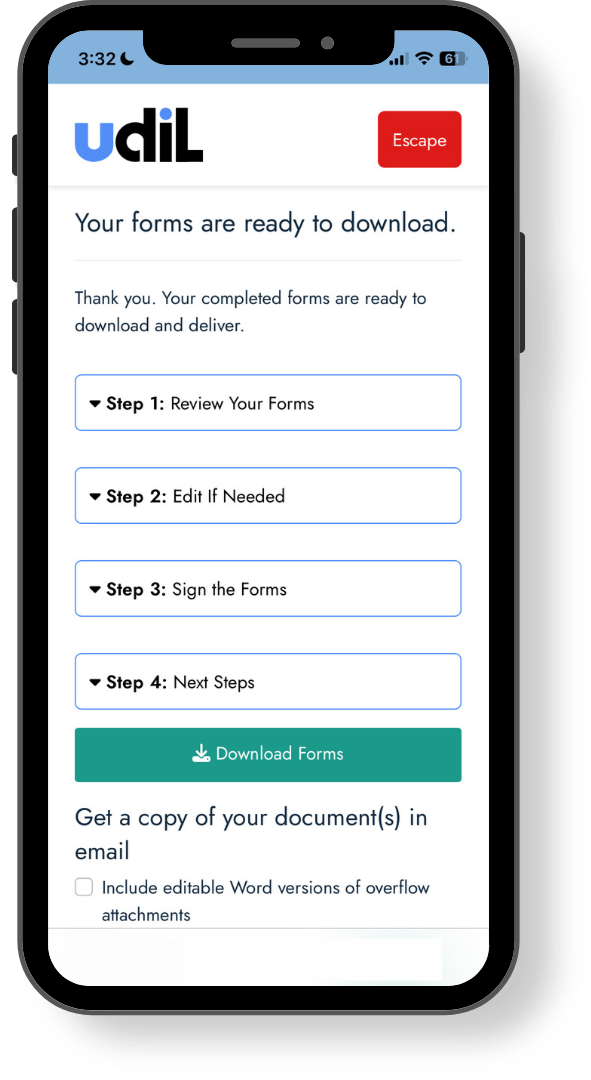
Download Your Court-Ready Forms
Want extra support? You can add a form review or consultation service, or attend our in-person Divorce Clinic.
How do our online, do-it-yourself divorce service packages work?
U Do It Legal provides four low-cost Uncontested Divorce service packages designed to cater to the legal needs of self-representing litigants completing their California Dissolution of Marriage or Domestic Partnership (divorce) case. Navigate your case and prepare your court paperwork by answering straightforward questions about your situation using our software’s guided interviews.
Low-cost, one-time purchase (starting at $49)

Step-by-step digital interviews: complete your CA judicial council forms (just like popular DIY tax-preparation software)
Court forms and documents generated with your answers to straightforward questions
California-focused guided workflow
Plain-language steps
Predictable flat pricing
Legal information only (not a law firm)
Built for cooperative cases
Common Divorce Questions Before You Start
What is an “Uncontested” Divorce?
An uncontested divorce generally means both spouses ultimately agree on all major issues in the case, including property division, debt allocation, support (if any), and parenting arrangements (if applicable). Instead of asking a judge to decide disputed issues, the parties work toward a written agreement and submit the required court forms for review.
In California, this type of divorce still requires proper filing, disclosures, and court approval, but it does not involve a trial over contested issues. Our guided software is designed specifically for cooperative cases where both spouses intend to reach a full agreement.
-
If you have children, our guided workflow can generate a final parenting plan and custody/visitation agreement language, where applicable.
We do not create requests for temporary custody or visitation orders while the case is pending. If you and your spouse cannot agree on a parenting plan during the divorce process, you may need a different approach.
-
We include financial disclosure tools and structured agreement drafting support for common property and debt situations.
-
Court approval depends on your specific circumstances and whether your paperwork meets California filing requirements and the court’s review standards. Our software helps you prepare and organize the required Judicial Council forms, but we can’t guarantee that a court will accept or approve any filing. If the court requests corrections, we provide guidance through our support channels on how to address common filing issues.

We Help You Start Where You Are
Whether you’re beginning your case or finalizing your agreement, we’ll route you to the right package.

Complete Uncontested Divorce with Stip. Judgment
Start-to-finish guided workflow for amicable California couples.

Petition Only (Standard or Joint)
Prepare and file your starting paperwork: divorce petition (standard or joint).

Stipulated Judgment + Written Agreement Only
For couples who are ready to finalize a filed case and submit judgment paperwork.

Financial Disclosures (PDDs) Only
Prepare common disclosure forms, including property and income/expense schedules.

IN-PERSON CALIFORNIA DIVORCE CLINIC
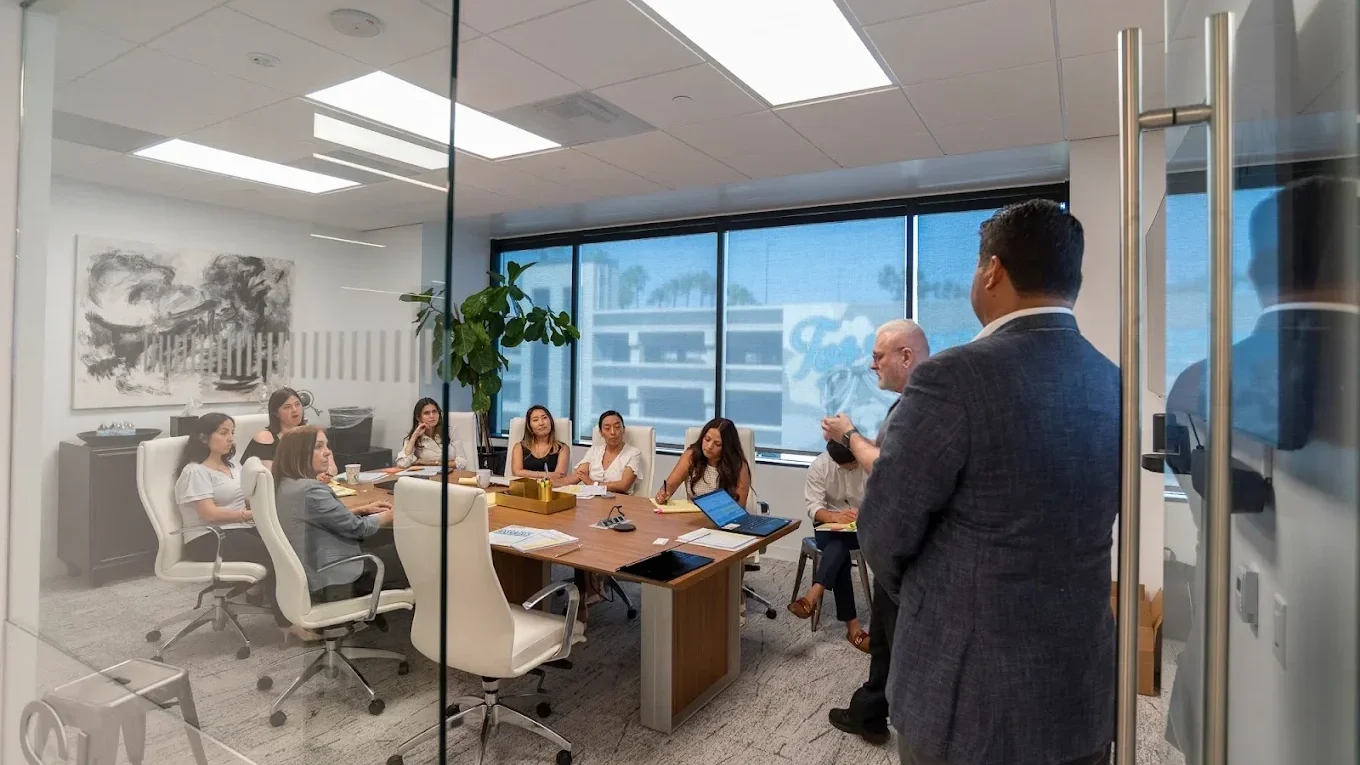
Prefer In-Person Support? Check out our Family Law Clinic (Divorce & DV Restraining Order Services Only)
South Bay & Greater Los Angeles
We also offer a flat-rate Family Law Clinic in Los Angeles for people who want guided support using the software plus live form review.
Guided software access
Form review
Limited-scope consultation
Small-session structure

What to know about UDIL’s Uncontested Divorce Clinic:

Location
UDIL’s Divorce Clinics are held in Torrance, California.
What’s Included?
Access to UDIL’s guided software
Hands-on support to prepare your court forms and attachments for filing
Final form review with attorney
Our Process
Finish your court paperwork in private sessions
Clinic sessions are small and scheduled in advance
Flat rate/One-time payment

Frequently Asked Questions
-
No. U Do It Legal provides legal information and guided document preparation software. We do not provide legal advice or attorney representation.
-
Yes. Many couples start with one spouse filing while still aiming to reach a full agreement. Both standard and joint petition filing paths are available in our Complete Case and Petition Only divorce packages.
-
No. For spouses purchasing the Complete Uncontested Divorce case package, spouses will need only one account.
-
Your package determines which CA Judicial Council forms and supporting documents are generated. After creating an account, the quiz on your Member Dashboard routes you to the right package based on your needs and where you are in the divorce process.
-
Yes. People may represent themselves in California family court. Our platform supports self-represented users with structured legal information and guided form preparation in the same way that popular tax preparation software companies help people prepare and file their taxes.
Ready to see if you qualify? Learn how we can support you step-by-step.
No payment required to begin
California Divorce (Dissolution of Marriage) Information
If you are considering divorce in California, understanding the legal process can help you decide which path makes sense — whether that’s working with an attorney, using guided legal software, or pursuing another approach.
Below is an overview of key divorce concepts for self-represented individuals.
Divorce Basics in California
What Is a Divorce (Dissolution of Marriage)?
A divorce — formally called a “dissolution of marriage” — is the legal process of ending a marriage in California. Even when spouses agree on all issues, the court must still review required paperwork before entering a final judgment.
A California divorce may involve decisions about:
Division of community property and debt
Child custody and visitation (if applicable)
Child support
Spousal support
Financial disclosures
In cooperative cases, spouses may resolve these issues by agreement rather than litigation.
-
A stipulated judgment is a written agreement between spouses that resolves all issues in the divorce.
It typically includes:
Property and debt division
Support terms (if any)
Parenting arrangements (if applicable)
The agreement is submitted to the court along with required Judicial Council forms for review.
If the court approves the paperwork, the judge signs the judgment and the divorce becomes final after the statutory waiting period.
Court approval is not automatic and depends on compliance with California requirements.
-
An uncontested divorce generally means both spouses agree on all major issues in the case — including property division, debt allocation, support (if any), and parenting arrangements (if applicable).
Rather than asking a judge to decide disputed issues, the parties submit agreed-upon paperwork to the court for review.
In California, uncontested cases still require:
Filing a petition
Completing financial disclosures
Meeting residency requirements
Submitting final judgment paperwork
Observing the six-month minimum waiting period
An uncontested divorce does not eliminate legal requirements — it simply avoids contested hearings.
-
In California, divorce can begin in one of two ways:
Standard Petition
One spouse files the petition and formally serves the other spouse.Joint Petition
Both spouses file together at the outset and sign the initial paperwork.A joint petition may be appropriate in cooperative situations where both parties agree to proceed together.
Not all cases qualify for a joint petition, and residency and other statutory requirements still apply.
-
California requires both spouses to exchange financial information early in the divorce process.
These disclosures typically include:
Property Declarations (FL-160) - Community and Separate Property
Income and Expense Declaration (FL-150)
Declaration Regarding Service of Disclosure (FL-141)
In many uncontested cases, spouses may agree to waive final declarations — but preliminary disclosures are generally still required.
Failure to properly complete disclosures can delay judgment.
-
California has a mandatory six-month waiting period from the date the respondent is served (or the joint petition is filed).
However, the total timeline can vary depending on:
How quickly paperwork is completed
Whether disclosures are exchanged properly
Court processing times
Whether corrections are required
Even in uncontested cases, divorce cannot be finalized sooner than six months.
-
California allows individuals to represent themselves in family court.
Some people choose to hire attorneys for:
Complex property division
High-conflict custody issues
Disputed support
Litigation or trial
Others may choose guided legal software when:
The case is cooperative
Both spouses intend to reach agreement
There is no active litigation
The goal is predictable, flat-fee support
U Do It Legal provides structured legal information and guided document preparation software. We do not provide legal advice or representation.
If you are unsure which path is appropriate, you may wish to consult with a licensed California attorney.
Common Types of Orders in a California Divorce
In cooperative cases, many of these issues can be resolved by written agreement rather than contested hearings. Divorce judgments may include orders addressing property, support, and parenting arrangements, such as:
Division of Community Property
Orders determining how assets and debts acquired during marriage are allocated between spouses.
California is a community property state, which generally means community property is divided equally unless the parties agree otherwise.
Child Support Order
Court-ordered payments, typically made by a noncustodial parent to the other parent for support of their minor child or children.
Separate Property Confirmation
Orders confirming that certain assets or debts belong to one spouse individually.
This may apply to property acquired before marriage or after separation, or by gift or inheritance.
Spousal or Domestic Partner Support Order
Court-ordered recurring payments from one spouse (or registered domestic partner) to the other to maintain the marital standard of living.
Child Custody and Visitation
Orders outlining legal custody (decision-making authority) and physical custody/parenting time arrangements for minor children.
Custody orders remain in effect until modified by a new court order.
Name Change Restoration
Orders restoring a spouse’s former name, if requested.
How Long Does a Divorce Case Take in California?
Mandatory Waiting Period
Minimum 6 months
California has a mandatory six-month waiting period before a divorce can become final.
The six months begins on:
The date the respondent is served (standard petition), or
The date a joint petition is filed
A divorce cannot be finalized sooner than this statutory minimum — even in uncontested cases.
Response Deadline (Standard Petition Only)
30 Days
In a standard petition case, the responding spouse has 30 days after service to file a response.
If no response is filed, the case may proceed by default.
If both parties participate and reach agreement, the case may proceed by stipulated judgment.
(Joint petitions do not require formal service or a response deadline.)
Preliminary Financial Disclosures
60 days after the initial Petition or Response is filed
California law requires each spouse to exchange Preliminary Declarations of Disclosure within 60 days of their first filing.
These generally include:
Schedule of Assets and Debts (FL-142)
Income and Expense Declaration (FL-150)
Declaration Regarding Service (FL-141)
Disclosures are typically exchanged, not filed, before final judgment paperwork is submitted.
Timelines vary based on court workload, case complexity, and whether corrections are required.
Preparing and Submitting Final Judgment
Varies by Case
In cooperative cases, spouses may prepare a written agreement and submit final judgment paperwork once disclosures are complete.
Court processing times vary by county.
If paperwork is incomplete or corrections are required, the timeline may extend.
Finalization
After review + 6-month minimum
A divorce becomes final when:
The court signs the judgment, and
The six-month waiting period has passed
The effective termination date is listed in the signed judgment.
Do You Need a Lawyer for a Divorce in California?

FREE California Judicial Council Forms (Court Forms)
Domestic Violence Restraining Order (DVRO) Court Forms
Parentage/Paternity Court Forms (Custody for Unwed Parents)
Dissolution of Marriage or Domestic Partnership (Divorce) Court Forms
Want low-cost, guided help with navigating your California Divorce case? Jump back to services →
Ready to see if you qualify? Learn how we can support you step-by-step.
No payment required to begin