Prepare Your California Domestic Violence Restraining Order Paperwork Step-by-Step
DVRO services from $149 — a fraction of attorney fees, with optional attorney review and consultation available.
| |
California court forms
Your information is private and never shared.
Built by attorneys
Self-help friendly

Is This DVRO Service Right for You?
U Do It Legal is designed for people handling a California restraining order case without a lawyer who want structured guidance preparing court forms.
This service may be a good fit if:
You need help preparing DV Restraining Order paperwork
You want step-by-step guidance through the forms
You are representing yourself in court
You prefer a flat-fee option instead of hiring an attorney
This service may not be the right fit if:
You need full legal representation
You are currently in active litigation with attorneys involved
You have an active DVRO that you you want to change, but you have since moved to another county or state and haven’t yet asked the court for a change of venue
If you’re unsure, start the eligibility quiz — we’ll help you understand which path makes sense.
Testimonials
What Our Clients Say

HOW UDIL CAN HELP

STEP 1:
Take the Eligibility Quiz
STEP 2:
Create Your Account
STEP 3:
Complete Guided Interviews
Step 4:
Download Your Court-Ready Forms
Want extra support? You can add a form review or consultation service, or attend our in-person clinic.
How do our online DVRO service packages work?
U Do It Legal provides five low-cost DVRO service packages that walk you through the paperwork required in a California Domestic Violence Restraining Order case.
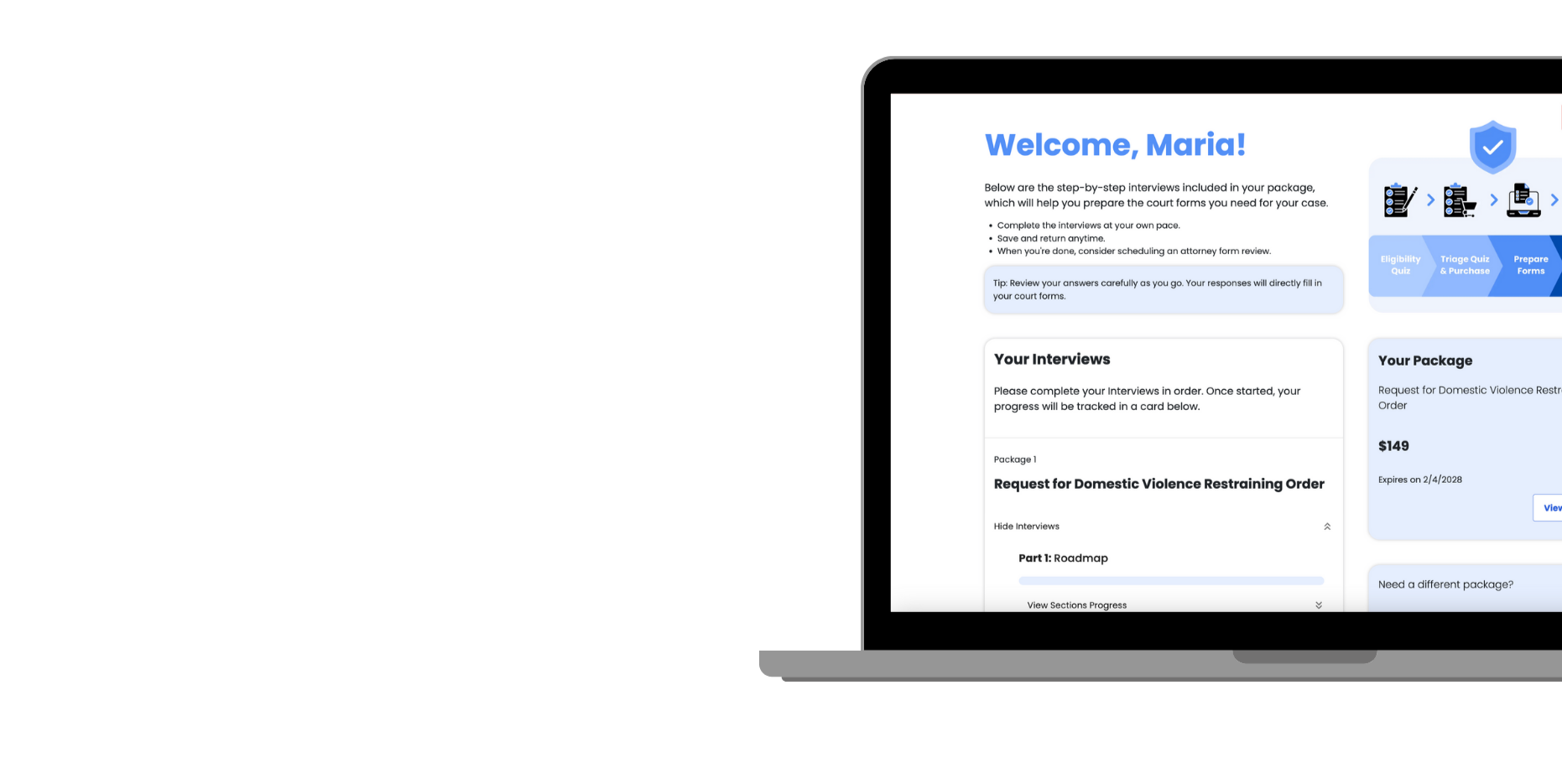
As you answer straightforward questions, the system prepares the appropriate Judicial Council court forms and supporting documents needed for your case.
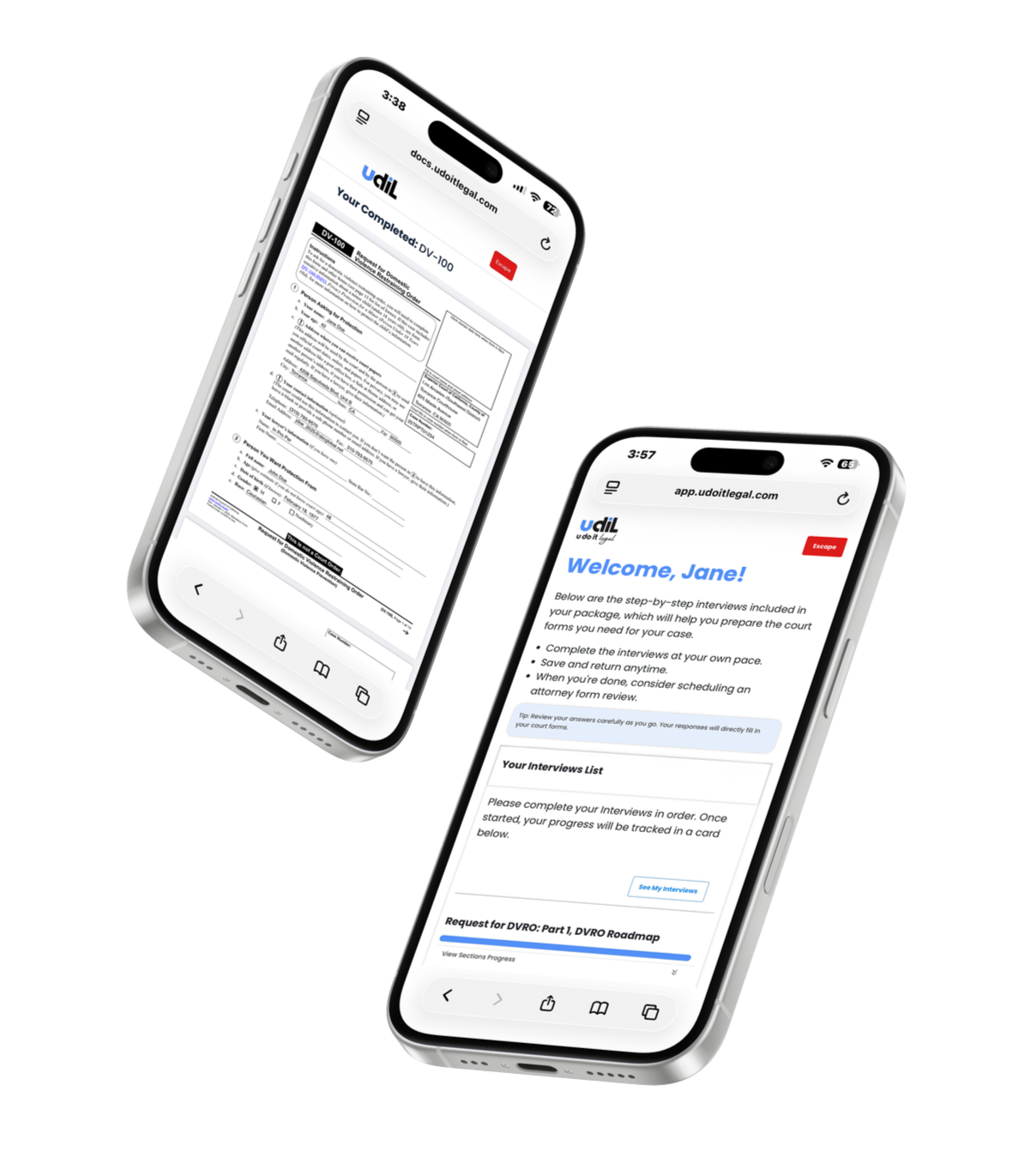
The process is similar to preparing taxes using guided software — you answer questions and the system generates the required forms.
Low-cost, one-time purchase (starting at $49)

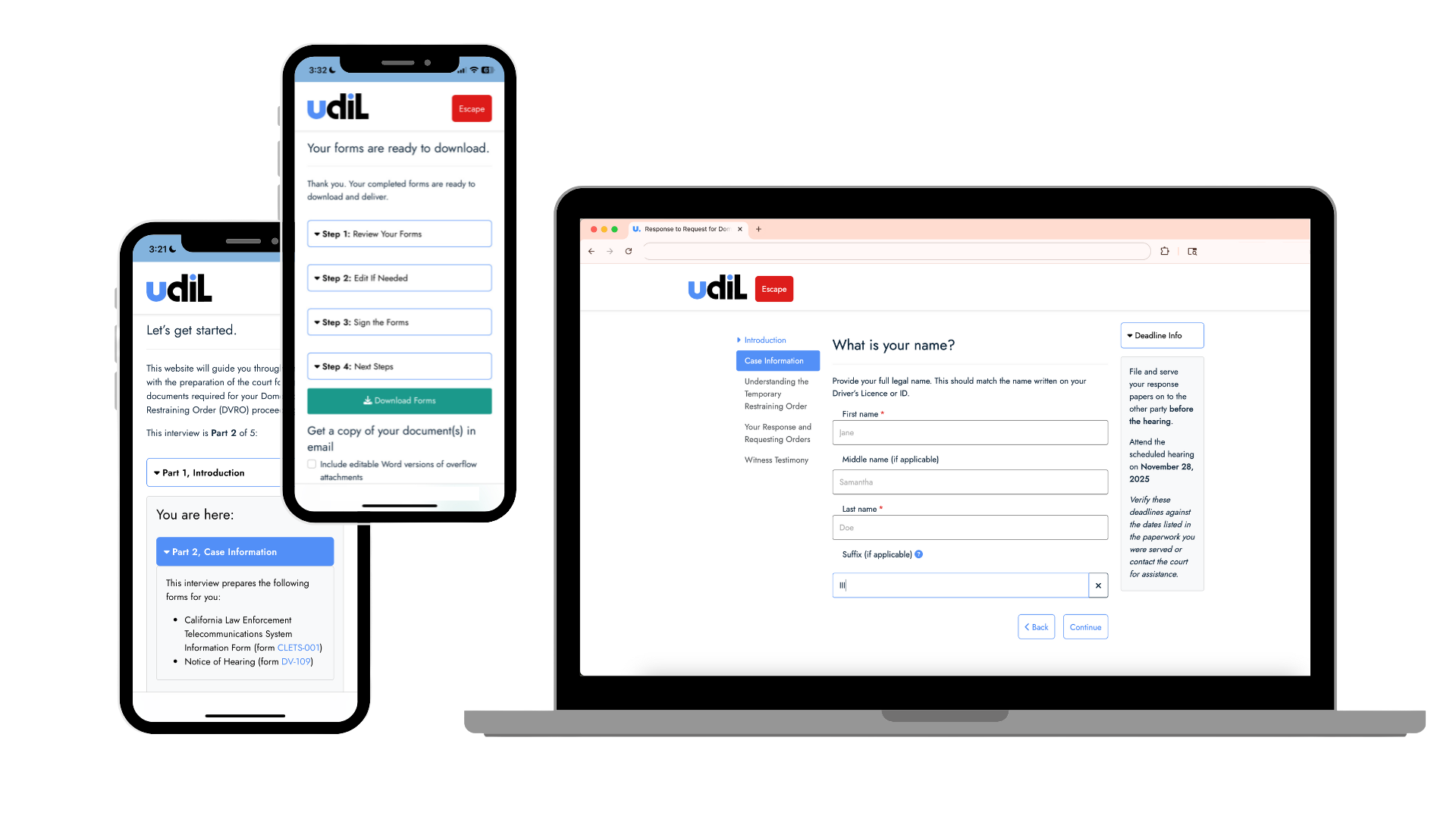
Step-by-step digital interviews: complete your CA judicial council forms (just like popular DIY tax-preparation software)
Court forms and documents generated with your answers to straightforward questions
Choose How You Want Help
Online Do-It-Yourself DVRO Services
Prepare your restraining order forms online at your own pace.
In-Person DVRO Clinic (Torrance, CA)
Complete your paperwork in one session with guidance and attorney review.
Form Review & Consultations
Have a professional review your prepared forms before filing.
Whether you’re seeking protection from the abuse of a partner or immediate family member, responding to a restraining order request, or seeking to renew, change, or end an active restraining order, our guided software helps self-represented individuals prepare the required California court forms step by step.
Online Do-It-Yourself California DV Restraining Order Services


Request a Domestic Violence Restraining Order (DVRO)
For individuals seeking protection from abuse, threats, harassment, or stalking.
Our guided interview helps you prepare the paperwork required to request a Domestic Violence Restraining Order (DVRO) in California.
You’ll answer structured questions and the system generates your court forms for review and filing.

Respond to a DVRO Request
For individuals who have been served with a request for a restraining order and need to file a response with the court.
Our guided workflow helps you organize the forms typically required to respond to a DVRO request and present your position before the hearing.
The system guides you through the questions used to prepare the response documents.

Renew an Existing DVRO
For protected parties who want to extend an existing DV restraining order before it expires.
California law allows certain restraining orders to be renewed by filing a request with the court before the expiration date.
Our guided interview helps prepare the paperwork commonly required to request renewal.

Request to Change or End a DVRO
For individuals asking the court to modify or terminate an existing DV restraining order.
This process is sometimes used when circumstances change and a party wants the court to adjust or end the existing order.
Our guided workflow helps prepare the forms typically used to request modification or termination.

Respond to a Request to Change or End a DVRO
For individuals who need to respond when the other party asks the court to modify or terminate an existing restraining order.
Our guided system helps you prepare the response paperwork used in these proceedings.
The workflow helps organize your response before the scheduled hearing.
For people who want guided, in-person help completing everything in one session:
Domestic Violence Restraining Order (DVRO) Clinic
South Bay & Greater Los Angeles
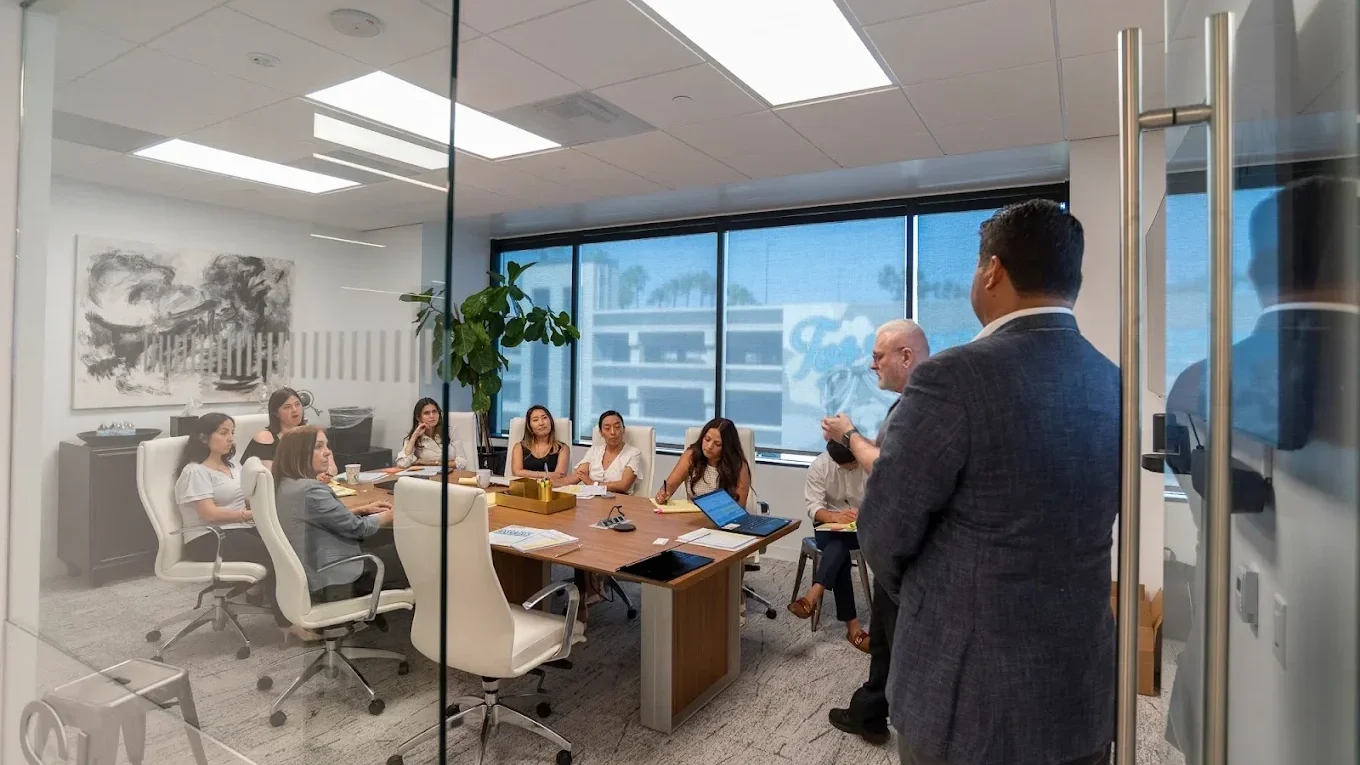
Prepare your domestic violence restraining order (DVRO) court forms in-person with help from attorneys and support professionals.

What to know about UDIL’s DVRO Clinic:

Location
UDIL’s DVRO Clinics are held in Torrance, California.
What’s Included?
Access to UDIL’s guided software
Hands-on support to prepare your court forms and evidence for filing
Final form review with attorney/DV victims' advocate
Our Process
Finish your court paperwork in one session
Clinic sessions are small, separated by party type for safety.
Flat rate/One-time payment
California Domestic Violence Restraining Order (DVRO) Information
DVRO Basics
What is a Domestic Violence Restraining Order?
A Domestic Violence Restraining Order (DVRO) is a legal order issued by a court in California to protect individuals from abuse or threats of abuse. In California, individuals who have experienced domestic violence, or whose minor child has, at the hands of a current or former intimate partner, immediate family member, or household member, are eligible to file for a DVRO.
-
A California judge may grant a request for a DVRO if the person requesting the restraining order can prove that they or their minor children have been abused by the other party.
Family Code section 6203 defines "abuse" as it relates to domestic violence:
“(a) For purposes of this act, “abuse” means any of the following:
(1) To intentionally or recklessly cause or attempt to cause bodily injury.
(2) Sexual assault.
(3) To place a person in reasonable apprehension of imminent serious bodily injury to that person or to another.
(4) To engage in any behavior that has been or could be enjoined pursuant to Section 6320.
(b) Abuse is not limited to the actual infliction of physical injury or assault.”
—
Additionally, Family Code section 6320(a) and (c)(1-5) also help define "abuse" by outlining the circumstances under which a court may issue an emergency temporary restraining order (aka., an "ex parte" order):
“(c) As used in this subdivision (a), “disturbing the peace of the other party”refers to conduct that, based on the totality of the circumstances, destroys the mental or emotional calm of the other party. This conduct may be committed directly or indirectly, including through the use of a third party, and by any method or through any means including, but not limited to, telephone, online accounts, text messages, internet-connected devices, or other electronic technologies. This conduct includes,but is not limited to, coercive control, which is a pattern of behavior that in purpose or effect unreasonably interferes with a person’s free will and personal liberty... [including]:
(1) Isolating the other party from friends, relatives, or other sources of support.
(2) Depriving the other party of basic necessities.
(3) Controlling, regulating, or monitoring the other party’s movements, communications, daily behavior, finances, economic resources, or access to services.
(4) Compelling the other party by force, threat of force, or intimidation, including threats based on actual or suspected immigration status, to engage in conduct from which the other party has a right to abstain or to abstain from conduct in which the other party has a right to engage.
(5) Engaging in reproductive coercion...”
(Click the hyperlinks above to read the full text)
-
Click here to review the California Judicial Council’s DVRO Information Sheet (form DV-500-INFO), which includes DVRO eligibility information and answers frequently asked questions about California restraining orders.
-
If you want to ask the court to change or end an active domestic violence restraining order after hearing and have moved to another county within California, you must file a Request for Order (RFO) with the court that originally issued the restraining order requesting a change of venue. This ensures that the court with the original jurisdiction over your case maintains consistency in handling the proceedings.
If traveling to the original county for court appearances poses significant difficulties due to distance or other practical concerns, you may request to transfer your case to a more convenient location closer to your new residence. You can petition for a change of venue under the California Code of Civil Procedure section 397, which allows for venue changes for reasons of convenience, necessity, or the interests of justice.
Note: While our services are designed to assist self-represented litigants in navigating California's legal system, please note that U Do It Legal currently does not offer services for individuals residing out of state or seeking to transfer cases out of California. For such cases, consulting with a qualified legal professional is crucial to understand the procedural requirements and ensure ongoing protection under the law.
How to Request a Restraining Order, Basic Steps:
-
You must file (submit) the necessary paperwork to ask the court for a DVRO.
The judge will decide whether you need a “temporary” restraining order right away, which can offer protection in the time leading up to the hearing on your request for a “permanent” restraining order (aka., a DVRO).
-
The person you want protection from must be served with (given) copies of the papers you filed with the court according to CA’s laws governing proper service of process.
You must submit a Proof of Service to the court afterwards.
-
You will tell the judge why you need a DVRO, and the other party will have the chance to present their side.
Both parties can bring witnesses and evidence in support of (or in opposition to) your requested orders.
-
The judge may grant or deny a “permanent” restraining order, which can offer protection for up to 5 years.
Protected parties can ask the court to renew an order within 3 months of its expiration for an additional 5 years or indefinitely.
Roadmap to California DVRO Proceedings
This video provides an overview of the general steps and processes related to filing a Request for Domestic Violence Restraining Order (DVRO) in the state of California, as well as resource referrals to notable safety-planning tools for parties seeking protection under the restraining order.
How long does a restraining order last?

Emergency Protective Order
Up to 5 court days or 7 calendar days

Temporary Restraining Order
Until the court hearing (about 3 to 4 weeks unless extended)

Permanent (Long-Term) Restraining Order
Up to 5 years (can be renewed for 5 more years or indefinitely)

Child Custody and Visitation Order
Until changed by a new court order (even if DVRO expires)

Child or Spousal Support Orders
Until changed by a new court order (even if DVRO expires)
How can U Do It Legal’s restraining order services help?
Some of the orders that UDIL can help you request or oppose in a DVRO case include:
Order to Not Abuse
Orders stopping the restrained party from abusing the protected party.
This can also apply to additional protected parties, such as children and roommates.
Child Support Order
Court-ordered payments, typically made by a noncustodial parent to the other parent for support of their minor child or children.
No-Contact Order
Orders prohibiting the restrained party from contacting the protected party in any way, which includes talking to, calling, or sending the protected party any messages, directly or indirectly (in person, online, or through third parties)
Spousal or Domestic Partner Support Order
Court-ordered recurring payments from one spouse (or registered domestic partner) to the other to maintain the marital standard of living.
Stay-Away Order
Orders prohibiting the restrained person from coming within a certain specified distance away (like 50 or 100 yards) from the protected party or parties and any protected locations such as their home, workplace, school, vehicle, etc.
Child Custody and Visitation Order
Orders outlining how parenting time, rights, and responsibilities are shared between parents over their minor children.
Other common orders in California DVRO proceedings include:
-
Orders making the restrained person move out from a household shared with the protected party (if granted, the restrained party, accompanied by law enforcement, can return to the residence to pick up clothing and personal belongings until the court hearing).
-
Orders giving you sole possession, use, or control over certain property (such as real estate, vehicles, items, etc.)
-
Orders making the restrained party attend a 52-week batterer intervention program.
-
Orders stopping the restrained person from owning or acquiring a gun or any other prohibited items while the restraining order is in effect.
-
Orders making the restrained party reimburse you for costs and services you incurred as a result of the restrained party's abuse.
-
Orders giving the protected party sole possession, care, and control of animals/pets.
-
Orders making the restrained party continue to make payments on any debts or bills that the two of you share.
Key California DV Restraining Order Statutes (Laws)
-
Family Code section 6211 defines the categories of individuals who may seek protection for abuse/domestic violence:
- A spouse or former spouse
- A cohabitant or former cohabitant
- A person with whom the respondent is having or has had a dating or engagement relationship
- A person with whom the respondent has had a child
- A child of a party
- Any other person related by consanguinity or affinity within the second degree.
In other words, a person is considered a victim of domestic violence in California if the person who abused them is someone they are or were married to, dated, lived with (as more than just roommates), share a child with, or are closely related to by blood or marriage.
See this Table of Consanguinity to see which relationships qualify (qualifying relationships are marked with a 1 or 2). -
Family Code section 6321 states that the court has the power to restrain or exclude a party from the family dwelling, the dwelling of the other party, the common dwelling of both parties, or the dwelling of the person who has care, custody, and control of a child, regardless of who has the legal title/who is on the lease.
-
Family Code section 6323 outlines provisions regarding temporary custody in domestic violence proceedings, in which the court may issue no-contact and no-visitation orders in its temporary domestic violence restraining order.
-
Family Code sections 6203 and 6320 define what counts as "abuse" for the purposes of requesting a Domestic Violence Restraining Order (DVRO). Abuse under California law is broader than just physical violence — it includes behaviors like making threats, harassing, stalking, disturbing someone's peace, and destroying personal property.
Family Code section 6203(a): "For purposes of this act, 'abuse' means any of the following:
(1) To intentionally or recklessly cause or attempt to cause bodily injury.
(2) Sexual assault.
(3) To place a person in reasonable apprehension of imminent serious bodily injury to that person or to another.
(4) To engage in any behavior that has been or could be enjoined pursuant to Section 6320."
Family Code section 6320: Conduct That May Be Restrained (Including Disturbing the Peace and Coercive Control)
Family Code section 6320 describes the types of behaviors the court can prohibit through a Domestic Violence Restraining Order. This includes not only physical violence and threats but also disturbing the protected party’s peace — including patterns of coercive control that affect a person’s emotional well-being, free will, or liberty. Abuse can be committed directly or indirectly, even through third parties or using electronic communications."(a) The court may issue an ex parte order enjoining a party from molesting, attacking, striking, stalking, threatening, sexually assaulting, battering, harassing, telephoning, including, but not limited to, making annoying telephone calls as described in Section 653m of the Penal Code, destroying personal property, contacting, either directly or indirectly, by any means, including, but not limited to, by mail or telephone, coming within a specified distance of, or disturbing the peace of the other party, and, in the discretion of the court, on a showing of good cause, of other named family or household members.
For purposes of this subdivision, "disturbing the peace of the other party" refers to conduct that, based on the totality of the circumstances, destroys the mental or emotional calm of the other party. This conduct may be committed directly or indirectly, including through the use of a third party, and by any method or through any means including, but not limited to, telephone, online accounts, text messages, internet-connected devices, or other electronic technologies. This conduct includes, but is not limited to, coercive control, which is a pattern of behavior that in purpose or effect unreasonably interferes with a person’s free will and personal liberty. Examples of coercive control include, but are not limited to, unreasonably engaging in any of the following:
(1) Isolating the other party from friends, relatives, or other sources of support.
(2) Depriving the other party of basic necessities
(3) Controlling, regulating, or monitoring the other party’s movements, communications, daily behavior, finances, economic resources, or access to services.
(4) Compelling the other party by force, threat of force, or intimidation, including threats based on actual or suspected immigration status, to engage in conduct from which the other party has a right to abstain or to abstain from conduct in which the other party has a right to engage.
(5) Engaging in reproductive coercion, which consists of control over the reproductive autonomy of another through force, threat of force, or intimidation, and may include, but is not limited to, unreasonably pressuring the other party to become pregnant, deliberately interfering with contraception use or access to reproductive health information, or using coercive tactics to control, or attempt to control, pregnancy outcomes."
Key Restraining Order Legal Terms
-
A Temporary Restraining Order (TRO) is a short-term protective order that a judge may grant based on your request (DV-100) without a full hearing. It typically lasts until the court date, usually around 21–25 days. (Family Code § 6320(a))
A Permanent Restraining Order (also called a DVRO or “Restraining Order After Hearing” (ROAH)) is issued after a court hearing. If granted, it can last up to five years and be renewed. (Family Code § 6345(a))
-
The Protected Party is the person asking the court for protection — the survivor of abuse. This can include not only the person filing the request but also children or other household members.
The Restrained Party is the person whom the restraining order is filed against — the individual accused of abuse or threatening behavior.
These roles are defined in the Judicial Council’s restraining order forms (e.g., DV-100, DV-110) and used throughout court documents to clarify which party the order protects and which it restrains.
-
Family Code section 6203 states,
(a) “…that the following abusive behaviors constitute domestic violence:
(1) To intentionally or recklessly cause or attempt to cause bodily injury.
(2) Sexual assault.
(3) To place a person in reasonable apprehension of imminent serious bodily injury to that person or to another.
(4) To engage in any behavior that has been or could be enjoined pursuant to Section 6320.
(b) Abuse is not limited to the actual infliction of physical injury or assault.
-
Coercive control is a form of abuse recognized under California’s domestic violence laws. It refers to a pattern of behavior that unreasonably interferes with a person’s free will and personal liberty.
Examples of coercive control listed in Family Code § 6320(c) include:
Isolating the person from family, friends, or support;
Controlling their daily activities, communication, movement, or finances;
Threatening or intimidating them into doing things they have the right not to do;
Using threats related to immigration status;
Reproductive coercion, such as interfering with contraception or pressuring pregnancy decisions.
Coercive control does not have to involve physical violence to qualify as abuse under California law.
-
In the context of DVROs, “disturbing the peace” means conduct that destroys the other person’s mental or emotional calm. It can include actions that are direct or indirect, and may be carried out in person or through technology (such as calls, texts, or social media).
Under Family Code § 6320(a), disturbing the peace includes:
“…conduct that, based on the totality of the circumstances, destroys the mental or emotional calm of the other party. This conduct may be committed directly or indirectly… including through the use of a third party… and by any method or through any means…”
It may involve harassment, intimidation, threats, or repeated unwanted contact—even if there’s no physical harm.
Types of Abuse (General; See CA Legal Definition Above for Specifics)
-

Physical Abuse
Intentional or reckless conduct that causes, or attempts to cause, bodily injury. This includes hitting, kicking, grabbing, pushing, choking, restraining, or blocking someone’s movement, as well as threats of serious physical harm.
-

Emotional / Psychological Abuse
A pattern of behavior intended to control, intimidate, or undermine another person’s emotional well-being. This can include insults, humiliation, intimidation, threats, manipulation, or coercive control that interferes with daily life.
-

Economic / Financial Abuse
Using money, work, or access to basic resources as a means of control. Examples include taking income, restricting access to bank accounts, preventing employment, or refusing to pay for necessities to create dependence.
-

Digital / Cyber Abuse
Using phones, social media, email, or other technology to harass, threaten, impersonate, monitor, or control someone. This can include unauthorized account access, tracking, repeated messages, or online intimidation.
-

Stalking
Repeated or ongoing conduct—such as following, monitoring, contacting, or surveilling—that causes someone to feel afraid, harassed, or unsafe. Stalking can occur in person or online, even without physical contact.
-

Sexual Assault
Any nonconsensual sexual contact or conduct, including acts accomplished through force, fear, threats, or coercion. Consent must be freely given, and sexual abuse can occur within intimate or family relationships.
-

Reproductive Coercion
Behaviors that interfere with a person’s reproductive autonomy, such as sabotaging birth control, pressuring pregnancy decisions, controlling access to reproductive healthcare, or threatening harm related to pregnancy or contraception.

FREE California Judicial Council Forms (Court Forms)
Domestic Violence Restraining Order (DVRO) Court Forms
Parentage/Paternity Court Forms (Custody for Unwed Parents)
Dissolution of Marriage or Domestic Partnership (Divorce) Court Forms
Want low-cost, guided help with navigating your California DVRO case? Jump back to services →
We’re here to simplify the paperwork for you…
-
![]()
Request for Domestic Violence Restraining Order
Prepare your formal request for a Domestic Violence Restraining Order (DVRO; form DV-100 and attachments). This package provides legal information on the factors the court considers in determining whether to grant a DVRO request and our software guides you step by step through preparing the court forms and evidence for your restraining order request.
-
![]()
Response to Request for Domestic Violence Restraining Order
Prepare your formal response to a request for a restraining order against you (form DV-120 and attachments). This package provides guidance on how to provide information to the court in support of, or in opposition to, the restraining order requested against you so you can understand and protect your rights. Our software guides you step-by-step through preparing your response forms and evidence.
-
![]()
Request to Renew Restraining Order After Hearing
Prepare your request to renew (form DV-700 and attachments) an active Domestic Violence Restraining Order (also known as a Restraining Order After Hearing, or ROAH). Note, the protected party does not have to prove that new abuse occurred for a renewal request to be granted. The renewal request must be submitted within three months of the order’s expiration, but the order cannot be renewed if expired.
-
![]()
Request to Change or End Restraining Order
Prepare a request to change or end your active DVRO (form DV-300 and attachments; also known as a Restraining Order After Hearing or ROAH). This package helps you prepare the court forms necessary to ask the court to amend (change) or terminate (end) the restraining order, whether you are a protected or restrained party.
-
![]()
Response to Request to Change or End Restraining Order
Prepare a response to a request to change or end a restraining order (DVRO or ROAH; form DV-320 and attachments) filed by the other party in your case. This package helps you prepare the court forms necessary to respond, in support of or in opposition to, the changes to the restraining order requested by the other party.